
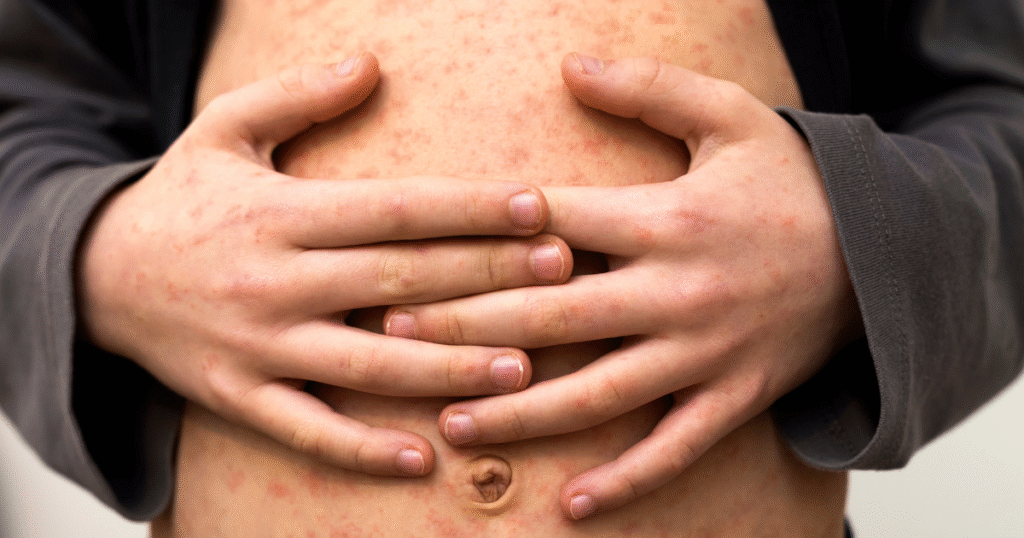
The Oregon Health Authority (OHA) has officially declared a measles outbreak in Oregon as the number of confirmed cases continues to rise. We know many families are concerned and have questions about how to best protect their children. Pediatric Associates of the Northwest is monitoring the outbreak closely and following the OHA’s guidance to ensure all our patients are cared for safely with evidence-based medicine.
Measles Symptoms to Look For
Measles is a viral respiratory illness and is the most contagious infectious disease. Individuals are contagious even before showing any symptoms, and may remain contagious until 4 days after the rash appears. Symptoms typically begin seven to 21 days after exposure.
Symptoms include:
- Fever,
- Cough,
- Runny Nose, and
- Conjunctivitis (pink eye), followed by
- A red, blotchy rash that starts on the face and spreads to other areas of the body
- Diarrhea
How Is Measles Spread?
The measles virus spreads through small respiratory droplets when an infected person breathes, speaks, coughs, or sneezes. These droplets can linger in the air for up to two hours after an infected person has left, and can infect up to 90% of unprotected individuals in close contact.
MMR Vaccination
The best protection against measles is through the MMR (measles, mumps, rubella) vaccine. The clinicians at Pediatric Associates of the Northwest strongly recommend the MMR vaccine, which is a 2-dose series. In our offices, the MMR vaccine is routinely given at the 12-month and 24-month well child visits. Local health officials and vaccine experts have verified that this schedule safely provides patients with earlier protection and is as effective as the standard MMR schedule (second dose at 4 years old rather than 24 months). One dose of the MMR vaccine gives 95% protection, and two doses gives 99%. Protection against measles is permanent and lifelong!
What to Do If You Suspect Measles
If your child has been exposed or your child is exhibiting measles-like symptoms, please call our office and speak with our triage nurses before coming into the office. This will allow us to make a plan that avoids exposing other patients in the waiting room. Patients with possible measles symptoms and/or exposure who have not received the MMR vaccine will be seen from their vehicles.
PANW Is Here to Help Protect Your Family
You can check whether your child has received their two doses of the MMR vaccine by logging into your Patient Portal account. If your child has not been vaccinated yet, please call our office for an appointment. Receiving even just the first dose of the vaccine significantly increases your child’s immunity to measles. Our triage nurses are available over the phone for questions about measles, the vaccine, or if you suspect your child has measles.
FAQ
Q – My child received their first MMR vaccine at 12 months of age. Can my child receive their second MMR before their 24-month well child visit?
A – Yes. A second MMR dose can be given 28 days after the first dose. Call our office to schedule a lab-only appointment for the second dose of MMR. Please note this can be done but is also not necessary. Receiving the second MMR dose at the 24-month well child visit is also appropriate.
Q – My child is between the ages of 6 months – 12 months, can my child receive an early dose of the MMR vaccine?
A – Yes, this is an option. The first dose of MMR can be given between ages 6 months to 12 months, however, it will not be considered a valid vaccine (as ongoing immunity will decline) and 2 additional doses of MMR will need to be given after age 12 months of age. Please schedule with your clinician to discuss if this is right for your child.
Q – Should I keep my child at home rather than going places to reduce the risk of exposure?
A – If your child is vaccinated, they should have no restrictions on visiting public places but if they are not, are too young to be vaccinated, or are immunocompromised, you may want to limit exposure to public places.
Additional Resources
Children’s Hospital of Philadelphia- Measles and MMR Information
Oregon Health Authority- Oregon Measles Outbreak
KGW News Interview with Dr. Scott Spencer- Measles Surge as Vaccine Misinformation Spreads (2025)