
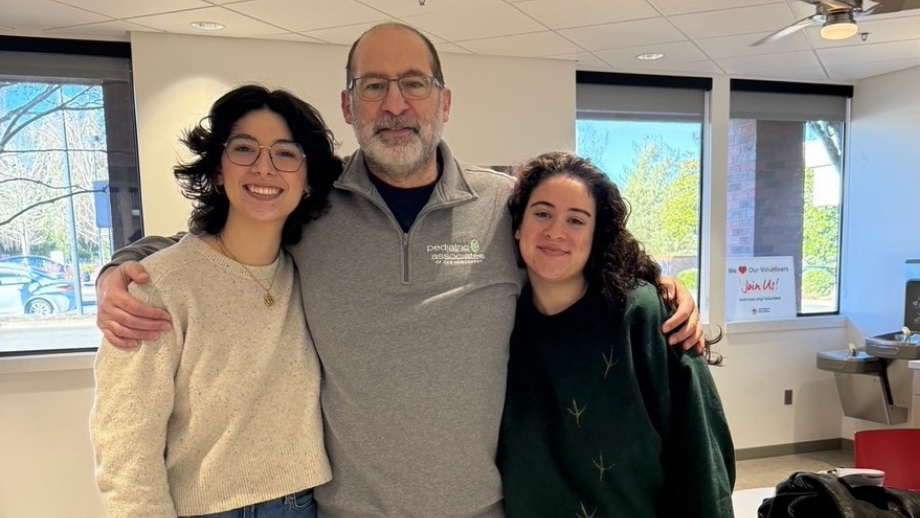
By a Pediatrician Who’s Donated 18 Gallons (Yes, 144 Units!)
Greetings, I hope your year is off to a healthy start! This is Dr. Rosenbloom and I want to share about an important milestone in my life.
After nearly three decades in pediatrics, I’ve learned that some of the most powerful acts of healing don’t happen in exam rooms, operating suites, or hospital wards. Sometimes, they happen in a quiet chair at the local blood donation center, with a stress ball in one hand and a bandage on the other.
Why I Keep Rolling Up My Sleeve To Donate Blood — And Why I Hope You’ll Join Me
I’ve donated 18 gallons of blood—144 units. That’s an odd statistic to be proud of, I suppose, but every time I hit a new milestone, I’m reminded that the habit I formed long ago has likely touched more lives than I’ll ever know. As a pediatrician, I’ve seen firsthand the moments when blood donation isn’t just helpful—it’s life-saving.
Here are the biggest reasons I encourage everyone, especially my patients’ families, to consider becoming regular blood donors.
1. Kids Need Blood More Often Than Most People Realize
You might think of blood donations as something mainly used in trauma or surgery—and they are. But many children rely on donated blood as part of their long-term medical care.
This includes kids with:
- Cancer, especially leukemia
- Sickle cell disease
- Severe infections or sepsis
- Traumatic injuries
- Heart defects requiring surgery
- Prematurity and neonatal complications
All of these situations may require frequent blood transfusions.
I’ve cared for toddlers who needed platelets weekly. I’ve seen teenagers with sickle cell disease whose severe pain crises eased only after a transfusion. When you donate blood, it might be going to a child whose life is just beginning.
2. Emergencies Don’t Wait for Someone to “Go Donate”
When a child is brought into the urgent care or the ER with significant blood loss, there’s no time to put out a call for donors. The blood needs to already be on the shelf. That only happens because people donate regularly—not only when there’s a news story or a crisis.
Most blood products have a short shelf life:
- Red blood cells: ~42 days
- Platelets: 5–7 days
- Plasma: frozen, lasts longer but requires processing
This means donation is not a one-time event. It’s an ongoing community responsibility.
3. Your One Donation Can Help Multiple Patients
Each unit of blood is separated into components:
- Red cells(for anemia, surgery, trauma)
- Plasma(for burns, clotting disorders)
- Platelets(for cancer and immune disorders)
Those 144 units I’ve donated may have helped well over 300 people. If you’ve ever wished you could make a bigger impact in the world with minimal effort—this is it.
4. It’s One of the Most Democratic Acts of Kindness
Most volunteer work requires time. Most charitable giving requires money. However, donating blood asks very little. It only requires:
- About 45–60 minutes
- No special skills
- No financial cost
It may be one of the most accessible ways to save a life.
And it’s beautifully anonymous. You’ll never know the name of the person you helped, and they’ll never know yours. But you will have made a connection—quietly, humbly, and profoundly.
5. It Sets an Example for Kids (And They Notice)
I talk with children and teens all the time about courage, empathy, and giving back. But kids learn far more from what adults do than what we say.
When your child watches you donate blood—even just once—they absorb the message:
“This is what we do. We help people.”
I have very fond memories as a small child (yes, I was small once upon a time) going to the Red Cross with my mom and grandmother, sitting at their side as they donated and sharing a cookie afterwards. We went regularly as a family. You can create the same community-minded commitment and legacy in your family.
6. It Makes You Healthier, Too
While the primary goal is helping patients, donors also enjoy some lesser-known benefits:
- A mini check-up with every donation (BP, pulse, hemoglobin)
- Lower iron levels, which can reduce certain health risks
- A sense of meaning and connection that improves emotional well-being
I’ve always left feeling lighter—both literally and figuratively.
7. The Need Never Stops
Natural disasters, flu-season donor shortages, holiday lulls—hospitals feel these deeply. America often runs with dangerously low inventories, particularly of:
- Type O (universal donor)
- Platelets
- Rare blood types
Every time you donate, you help stabilize a system that children and adults depend on every hour of every day.
If 18 Gallons Sounds Impossible, Start With One Pint
I didn’t set out to donate 144 units. I set out to donate once.
Then I went back. And then again. And at some point, rolling up my sleeve became a ritual—a small, regular contribution to a world that sometimes feels too big to change. But every unit matters. One pint can save a life. And that life might be a child who simply needs the world to show up for them.
If you’ve ever wondered whether you could make a real difference, here’s your answer: Yes. You can. And a child might be counting on it.
Interested in learning more about donating blood or whether your child is old enough to do so? Bring it up at your next appointment with your trusted pediatrician at PANW.